
Looking for expert help with media & entertainment?
Preparing a sponsored-content disclosure review packet
How Can Virtual Legal Assistants Help with preparing a sponsored-content disclosure review packet?
Virtual legal assistants from Remote Legal Team LLC can support firm-directed packet assembly by organizing supplied relationship records, exact draft assets, and disclosure observations for counsel and marketing review.

Legal assistant

Remote paralegal

Intake specialist
The task and the problem
A caption can include a disclosure while the video itself omits it, or a draft can make a product claim not supported in the supplied materials. A remote sponsored-content disclosure review packet helps identify those factual conditions through legal file indexing and quality checks before release. FTC Disclosures 101 for social media influencers addresses material connections and disclosure placement, including video disclosures within the video; counsel evaluates the actual content and context.
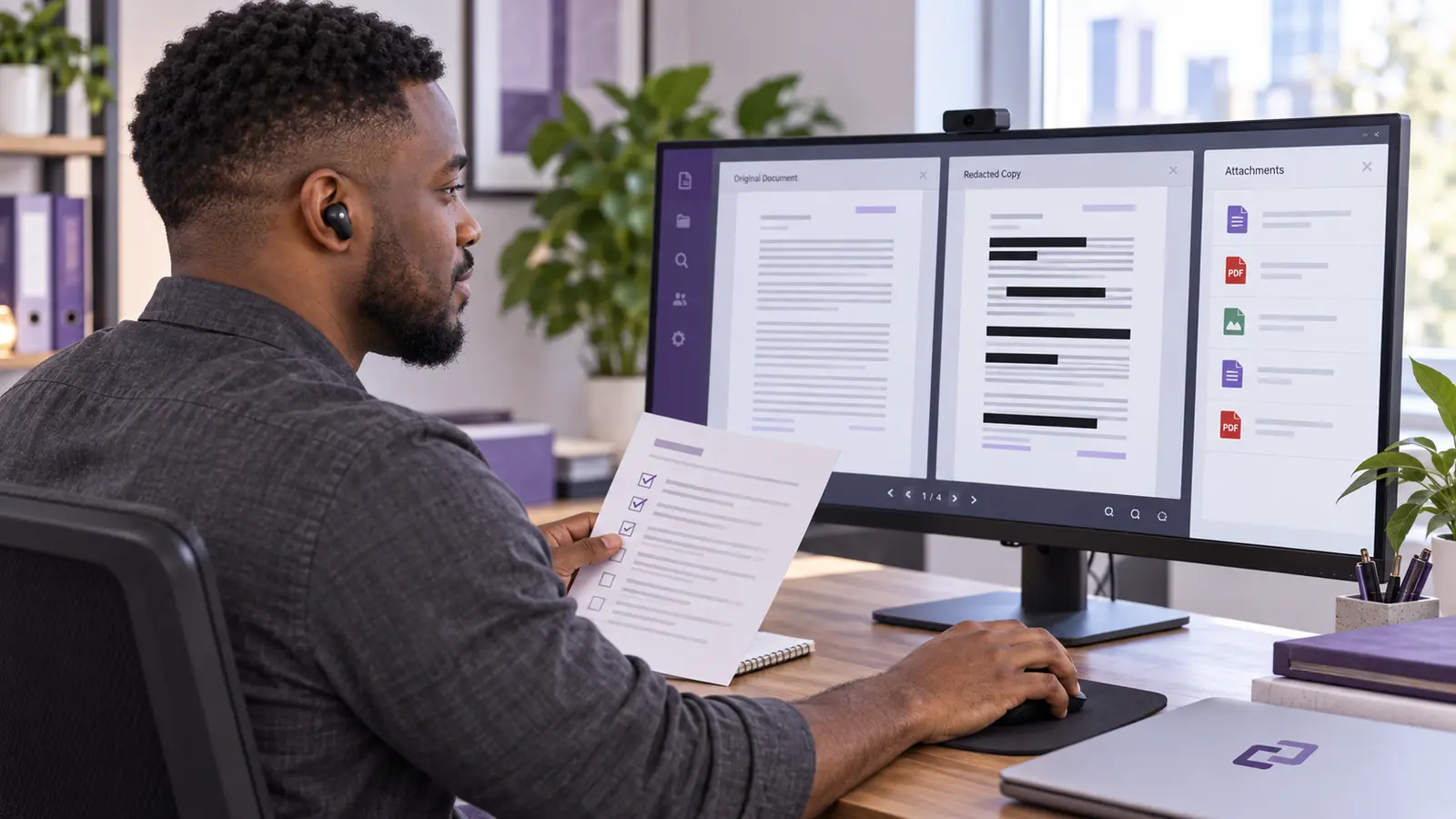
What the firm supplies
The firm supplies the sponsorship agreement, compensation or gift facts, draft video and caption, counsel’s review checklist, approved claim support, and reviewer. Marketing confirms platforms and versions. Counsel approves disclosures and legal claims, and the assistant may support draft assembly and document production plus limited contract abstraction for law firms from the supplied agreement data. The assistant may prepare a review packet but cannot publish, alter endorsements independently, or attest that a campaign complies.
How the work moves
| Step | Input | Assistant action | Output | Attorney review |
|---|---|---|---|---|
| 1. Identify relationship | Agreement and benefit records | Record supplied connection facts without assuming disclosure result | Relationship sheet | Determine legal treatment |
| 2. Freeze asset | Draft video, image, and caption | Assign version IDs and preserve exact content | Asset manifest | Confirm review scope |
| 3. Observe | Approved checklist | Record disclosure location and claim-support references | Review evidence table | Assess adequacy and claims |
| 4. Recheck | Approved edits | Compare final draft to reviewed version and retain changes | Publication review packet | Authorize release |
Illustrative example
Illustrative matter ME-709 involves a gifted-product campaign. The caption includes disclosure language, but the supplied video contains none. A performance claim appears in the voiceover without supporting material in the review folder. The assistant flags both for counsel before release.
| Review item | Observed evidence | Decision needed |
|---|---|---|
| Brand connection | Gift recorded in campaign brief | Counsel disclosure review |
| Video disclosure | Caption only; none observed in video | Placement correction review |
| Performance claim | Voiceover statement; no support linked | Claim substantiation review |
| Final asset | Revised video not yet supplied | Publication approval pending |
Deliverables, missing information, and escalation
Deliver the relationship sheet, exact asset manifest, observation table, and final-version comparison. Check the rendered asset rather than relying solely on script text so the remote sponsored-content disclosure review packet reflects the actual version sent for review. Preserve the actual compensation or gift facts and do not assume a platform label alone establishes adequacy. Counsel and the marketing owner approve wording, evidence, placement, and any later change before publication.
Systems and responsible AI use
Use approved media review tools with timecoded comments and version locks. AI may transcribe a draft for human comparison but cannot approve claims, generate personal experiences, or infer legal compliance. No confidential campaign records enter unapproved AI. No autonomous posting, influencer messages, legal date calculations, or removal of review holds occurs.
What the firm could measure
-
Per monthly campaign batch, count assigned asset versions with a recorded relationship check and disclosure observation divided by versions reviewed, using the table.
-
Report unsupported claim statements and unreviewed final edits separately in statements and assets at handoff, using the queue; no regulatory compliance or campaign outcome is promised.
Practical questions
Is a disclosure in the caption enough for a video?
FTC guidance addresses disclosure within the video, not only its description. Counsel reviews the actual presentation and approves the required treatment for that content.
What if the influencer received a gift rather than cash?
Record the benefit accurately and send it for review. FTC guidance includes free or discounted products in material-connection considerations.
Can an assistant approve a claim that sounds ordinary?
No. Link the statement to approved support or flag the gap; counsel and the designated reviewer decide whether it can be published.
Sources
-
FTC Disclosures 101 for social media influencers: Material-connection disclosure context; counsel evaluates actual placement and claims, with no automatic compliance conclusion.
-
ABA Model Rule 5.3: Model supervision framework; jurisdiction adoption and firm instructions require attorney review.
Where can this remote legal support workflow be useful?
For firms preparing a sponsored-content disclosure review packet, virtual legal assistants can organize the supplied records and prepare the review handoff remotely. These cited market examples provide context for the workflow, not local legal advice.
Los Angeles / Hollywood: virtual legal assistant support
FilmLA describes Greater Los Angeles as a film, television, and commercial production center and discusses permit coordination with public authorities and community relations.
A firm with work connected to Los Angeles can use this task study to define the records, access permissions, and attorney review required before assigning remote support.
New York City: remote legal outsourcing
NYC Media describes the City’s official broadcast and media-production group, providing a concrete example of media-production activity in New York City.
For work connected to New York City, the same legal BPO handoff must identify the reviewing attorney, unresolved questions, and actions the assistant is not authorized to take.
Location references describe industry or public-resource context. They do not claim a Remote Legal Team LLC office, local client relationship, government affiliation, or authority to practise law in these locations.